
'the Abbot is not only virtuous and well learned in Holy Scripture but also has right well repaired the ruin and decay left by his predecessor's negligence and brought the convent to good order.'
The History of Bruern and its Holiday Cottages
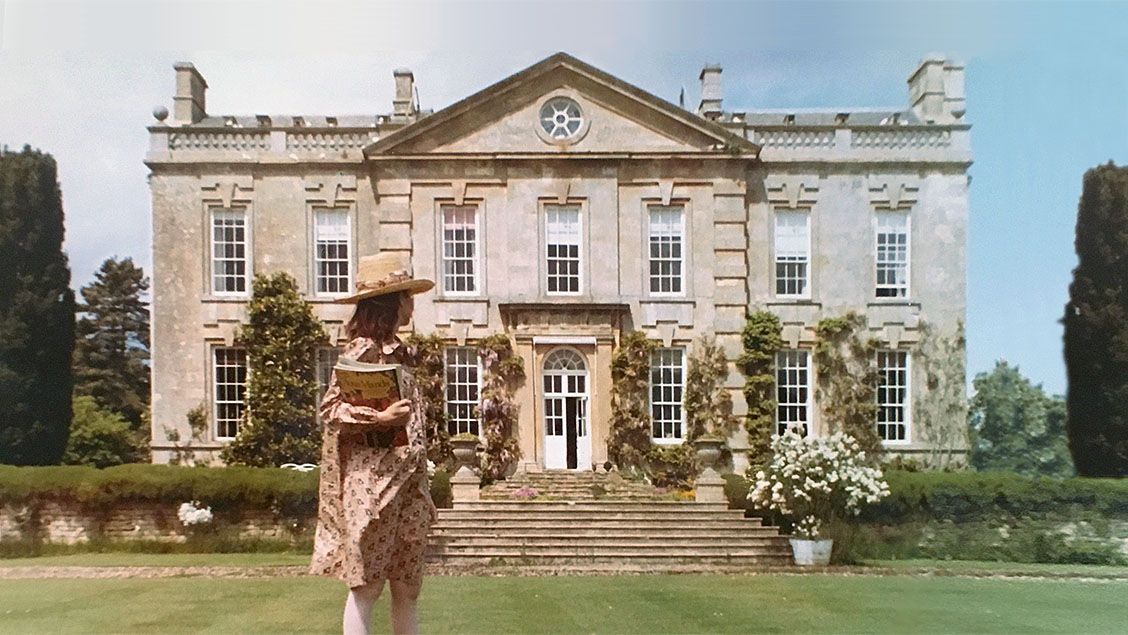
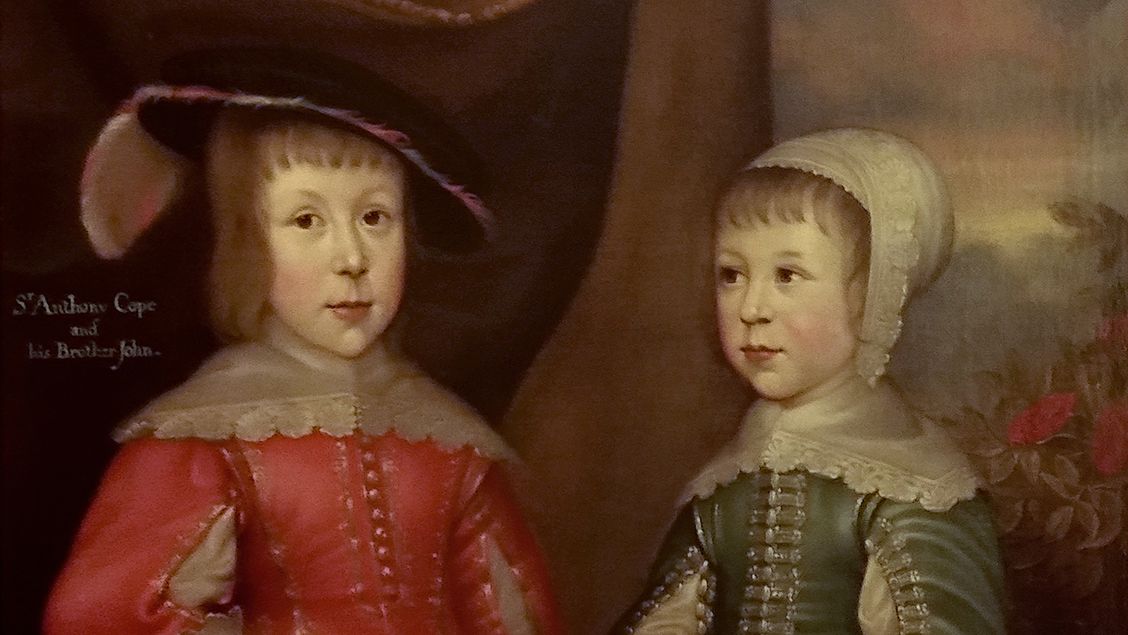
The stone plaque on the wall of Goodwood announces that the Bruern stables were finished in 1882, to accommodate the horses, carriages and grooms of Bruern Abbey, an exceptional Cotswolds country house in the Adam style, whose imposing entrance lies just across the road. The Abbey itself is a much earlier building: described by Pevsner as 'an attractive example of local Baroque', it was built for Sir John Cope (whose portrait is still at Bruern and is reproduced on this page); this was twenty-five years before his resounding defeat in 1745 by Bonnie Prince Charlie's army at the battle of Prestonpans - a debacle that briefly threatened to result in the disintegration of the UK and which was commemorated by a mocking ditty popular in Scotland beginning 'Hey, Johnny Cope...' The architect may have been William Townesend, who worked with Vanbrugh on Blenheim Palace.
All but the south facade of Sir John's house was burnt down in 1780; it was rebuilt with two wings, infilled with a huge staircase hall a hundred years later by Cecil Samuda, (the proud author of the plaque). There's a photograph of Princess Victoria of Schleswig-Holstein (a grand-daughter of Queen Victoria's) having tea on the terrace of Bruern Abbey, which may date from his time, the ladies are bustled, the gentlemen moustachioed; in the background not an inch of stone is visible behind the curtain of ivy, and hardly a glimmer of sunlight can have penetrated the heavy lace curtains.
The real Cistercian Abbey was founded in 1147. No one knows the exact site, but the absence of cropmarks in the boiling hot summer of 1976 would seem to indicate that the present Bruern was built over the old Abbey's foundations. The monastery was small and disreputable even compared to others in the Cotswolds, with a racy history of succession plots, appeals to Rome, deposed abbots, riots, and even on one occasion the mediaeval equivalent of having the bailiffs in. The monks, like most Cistercians and practically everyone with land in the Cotswolds, went in for sheep; English wool was the most highly prized and highly priced in Europe, and wool from the Cotswolds was the best and priciest of all. Their finances were always rocky, however, and things were so bad in 1233 that they had to petition the king to be allowed to hang onto their flocks as long as they had any other possessions that could be distrained for debt.
After various ups and downs, mostly downs, Thomas Cromwell's inspector, John Tregonwell, made a surprisingly upbeat report on Bruern in 1535: 'the Abbot is not only virtuous and well learned in Holy Scripture but also has right well repaired the ruin and decay left by his predecessor's negligence and brought the convent to good order.'
Much good it did him. The following year, Bruern Abbey, along with every other abbey and convent in England, was suppressed by Henry VIII, the Abbot leaving with a pension of £22 a year and the fourteen remaining monks for an unknown fate.
The only visible relics of the old Abbey are the monastic fishpond in Judy Astor's garden, a few carved stones which turn up whenever the present Bruern Abbey has building work done on it (the stone having been thriftily refaced and re-used), and a mysterious room described by Pevsner as a 'groined vault of three bays', in Judy Astor's house. The debate on its function and origins still continues: it has been traditionally referred to as the 'Monks' Chapel', but some people have put forward a rather more mundane solution to the question. They say that being too small for a chapel, even for fourteen monks and an abbot, but conveniently close to the fishpond, it may once have been an ice-house in which to keep the Lenten fish fresh.
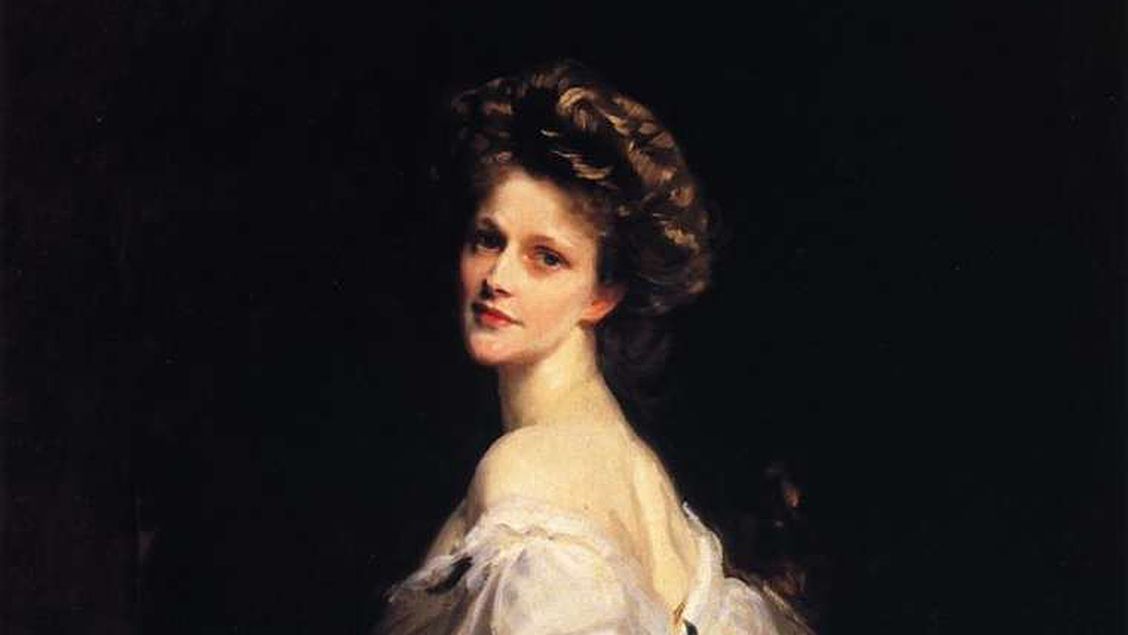
In 1947, Bruern Abbey and its estate were bought by Michael Astor (1916-1980), the third son of Waldorf, 2nd Viscount Astor and Nancy, his irrepressible wife, a Virginian born and bred, who was the first woman Member to sit in the House of Commons. He did not consider Bruern particularly grand; rather modest if anything compared to Cliveden where he grew up, but nevertheless in Bruern's heyday there were eleven household staff and thirteen men in the woods, the carpenter's shop, the garage and the gardens. There was an estate cricket team and an estate club in the Abbey courtyard, and at weekends Bruern attracted an idiosyncratic and colourful cross-section of post-war English society, with a bias towards politics, literature and the arts, the bill of fare ranging from ballooning to croquet.
By Michael Astor's death the horses had long since left the Stable Yard, although the stables (the present day Aintree and Newmarket) still existed, immensely high ceilinged, with cream tiled walls and blue stone cobbled floors. Between them, in Samuda's day, was the carriage house, now Sandown, and above that, the hayloft (Cheltenham). Epsom and Goodwood housed the groom and the cowman, and Saratoga the cow. Part of Aintree was used as a bothy - a dormitory and kitchen for bachelor gardeners, with an outdoor privy tucked away behind the archway entrance to the walled garden, then the source of cut flowers.
A short distance from the Stable Yard were the outbuildings. Shipton was converted from an old stone barn, which housed tractors in one half and the Bruern electrical sub-station in the other, and the Laundry, Shop and Games Room were conjured from a long low line of sheds. Cope, the most ancient of all the buildings, had been a mill for centuries since monastic times; it was near collapse with a tree growing out of one wall when work started on it in 1999, although the mill wheel, half buried, was still in place. After three feet of earth had been excavated, the full six foot diameter of the mill wheel stood proud, and the old stone threshing floor was revealed. Having been quarried long before the technology existed to saw stone into slabs, the huge boulders had been bedded into the earth and their upper surface painstakingly chiselled flat.
The stream which once turned the mill wheel had to be piped underground from the weir to the bridge outside the Games Room; from there, it makes its way under the road, through the park to the monastic fishpond, and thence to the Evenlode and the Thames, as it has been doing since time immemorial.
Holiday Cottage Summary | Bruern Holiday Cottages - home | France Chateau Rentals | © Five Star Systems 2000-2006
Book Online | Contact | Services | News | History | Spa@the Stables | Environment | Equipment | Decor | Facilities | Gardens | Children
Practicalities | Directions| T's & C's| Reviews & Awards| The Cotswolds


